Author Archive for Jill Lawson – Page 4

50 Quotations for Self-Empowerment

We see the brightness of a new page where everything yet can happen.
— Rainer Maria Rilke

Don’t ask yourself what the world needs. Ask yourself what makes you come alive, and then go do it. Because what the world needs is people who have come alive.
— Harold Thurman Whitman

To be a warrior is not a simple matter of wishing to be one. It is rather an endless struggle that will go on to the very last moment of our lives. Nobody is born a warrior, in exactly the same way that nobody is born an average man. We make ourselves into one or the other.
— Carlos Castaneda

You gain strength, experience and confidence by every experience where you really stop to look fear in the face. You must do the thing you cannot do.
— Eleanor Roosevelt

Strength does not come from physical capacity. It comes from an indomitable will.
— Mahatma Gandhi

Truth only reveals itself when one gives up all preconceived ideas.
— Shoseki

When you become detached mentally from yourself and concentrate on helping other people with their difficulties, you will be able to cope with your own more effectively. Somehow, the act of self-giving is a personal power-releasing factor.
— Norman Vincent Peale

Within each of us is a hidden store of energy. Energy we can release to compete in the marathon of life. Within each of us is a hidden store of courage, courage to give us the strength to face any challenge. Within each of us is a hidden store of determination. Determination to keep us in the race when all seems lost.
— Roger Dawson

We need to find the courage to say ‘NO’ to the things and people that are not serving us if we want to rediscover ourselves and live our lives with authenticity.
— Dr. Barbara DeAngelis

Reach high, for stars lie hidden in your soul. Dream deep, for every dream precedes the goal.
— Pamela Vaull Starr

Any time we feel twinges of resentment because we are too often asked to volunteer, it’s time to remind ourselves that we CAN choose to change our behavior and say: “NO” … a word that will do wonders for our self-esteem.
— Chelle Thompson, Editor of Inspiration Line

There is a delicate balance of putting yourself last and not being a doormat and thinking of yourself first and not coming off as selfish, arrogant or bossy. We spend the majority of our lives attempting to perfect this balance.
 Cindy L. Teachey, “Building Lifelong Relationships” 1994

You have been criticizing yourself for years, and it hasn’t worked. Try approving of yourself and see what happens.
— Louise L. Hay, Best-selling Author of “You Can Heal Your Life”

I’m not afraid of storms for I’m learning how to sail my ship.
 Louisa May Alcott, Author & Women’s Activist (1832-1888)

Humility does not mean you think less of yourself. It means you think of yourself less.
 Ken Blanchard, Motivational Speaker & Author

Do not follow where the path may lead. Go instead where there is no path and leave a trail.
— 
Muriel Strode, American Author “At the Roots of Grasses”

When I’m trusting and being myself as fully as possible, everything in my life reflects this by
falling into place easily, often miraculously.
— Shakti Gawain, Bestselling Personal Growth Author

Man cannot discover new oceans unless he has the courage to lose sight of the shore.
 Andre Gide, French Author (1869-1951)

Sometimes risk taking may involve the most simple of acts. Yet we often whip up a bag full of excuses to avoid taking action. For goodness sake (literally), let’s step beyond our security bubbles and start reaching out to those who cross our path.
 Chelle Thompson, Editor of Inspiration Line

Each choice we make causes a ripple effect in our lives. When things happen to us, it is the reaction we choose that can create the difference between the sorrows of our past and the joy in our future.
 Chelle Thompson, Editor of Inspiration Line 

You may feel like dwelling on your limits or your fears. Don’t do it. A perfect prescription for a squandered, unfulfilled life is to accommodate self-defeating feelings while undercutting your finest, most productive ones.
— Marsha Sinetar 

Nurture your mind with great thoughts, for you will never go any higher than you think.
— Benjamin Disraeli

The art of living lies not in eliminating but in growing with troubles.
— Bernard M. Baruch

I believe that anyone can conquer fear by doing the things he fears to do, provided he keeps doing them until he gets a record of successful experiences behind him.

— Eleanor Roosevelt

We are so obsessed with doing that we have no time and no imagination left for being. As a result, men are valued not for what they are but for what they do or what they have — for their usefulness.
— Thomas Merton

Man did not weave the web of life, he is merely a strand in it. Whatever he does to the web, he does to himself.
— Chief Seattle

It’s not true that nice guys finish last. Nice guys are winners before the game even starts.
— Addison Walker

All problems become smaller if you don’t dodge them, but confront them. Touch a thistle timidly, and it pricks you; grasp it boldly, and its spines crumble.
— William S. Halsey

Fear comes from uncertainty. When we are absolutely certain, whether of our worth or worthlessness, we are almost impervious to fear.

— William Congreve

If you let fear of consequence prevent you from following your deepest instinct, then your life will be safe, expedient and thin.

— Katharine Butler Hathaway

Have patience with all things, but chiefly have patience with yourself. Do not lose courage in considering your own imperfections, but instantly set about remedying them — every day begin the task anew.
— Saint Francis de Sales

Courage is being scared to death — and saddling up anyway.
— John Wayne

“Come to the edge,” He said. They said, “We are afraid.” “Come to the edge,” He said. They came. He pushed them … and they flew.
— Guillaume Apollinaire 

Confront your fears, list them, get to know them, and only then will you be able to put them aside and move ahead.
— Jerry Gillies

Courage is doing what you’re afraid to do. There can be no courage unless you’re scared.
— Eddie Rickenbacker

Courage is not the absence of fear, but rather the judgment that something else is more important than fear.
— Ambrose Redmoon 

Courage is reclaiming your life after a devastating event robs you of your confidence and self-esteem. It is facing tomorrow with a firm resolve to reach deep within yourself to find another strength, another talent. … It is taking yourself to another level of your own existence where you are once again whole, productive, special…
— Catherine Britton 

Courage is the first of human qualities because it is the quality which guarantees the others.
— Aristotle 

The courage of life is often a less dramatic spectacle than the courage of a final moment, but it is no less than a magnificent mixture of triumph and tragedy. People do what they must — in spite of personal consequences, in spite of obstacles and dangers and pressures — and that is the basis of all human morality.
— John F. Kennedy 

Courage is the atom of change.
— Bettina R. Flores 

Each time a person stands up for an ideal, or acts to improve the lot of others, or strikes out against injustice, he sends forth a tiny ripple of hope, and crossing each other from a million different centers of energy and daring, these ripples build a current that can sweep down the mightiest walls of oppression and resistance.
— Robert F. Kennedy

A hero is no braver than an ordinary man, but he is braver five minutes longer.
— Ralph Waldo Emerson 

I have not ceased being fearful, but I have ceased to let fear control me. I have accepted fear as a part of life — specifically the fear of change, the fear of the unknown; and I have gone ahead despite the pounding in my heart that says: turn back, turn back, you’ll die if you venture too far.
— Erica Jong 

It takes courage to grow up and turn out to be who you really are.
— e.e. cummings

If our vocabulary did not contain the words trouble, adversity, calamity and grief, it could not contain the words, bravery, patience and self-sacrifice. Those who face no calamity will need no courage. Mysterious though it is, the human characteristics we admire most grow in a soil with a strong mixture of trouble.
— Dale Turner

It is not because things are difficult that we do not dare, it is because we do not dare that things are difficult.
— Seneca 

Something happens to me when I witness someone’s courage. They may not know I’m watching and I might not let them know. But something happens to me that will last me for a lifetime. To fill me when I’m empty, and rock me when I’m low.
— Holly Near

Never be afraid to try something new. Remember, amateurs built the ark. Professionals built the Titanic.
— Unknown

There are people who put their dreams in a little box and say, “Yes, I’ve got dreams, of course I’ve got dreams.” Then they put the box away and bring it out once in awhile to look in it, and yep, they’re still there. These are great dreams, but they never even get out of the box. It takes an uncommon amount of guts to put your dreams on the line, to hold them up and say, “How good or how bad am I?” That’s where courage comes in.
— Erma Bombeck 

Never grow a wishbone, daughter, where you backbone ought to be.
— Clementine Paddleford 

What is needed, rather than running away or controlling or suppressing or any other resistance, is understanding fear; that means, watch it, learn about it, come directly into contact with it. We are here to learn about fear, not how to escape from it.
— Jiddu Krishnamurti 

Whatever course you decide upon, there is always someone to tell you that you are wrong. There are always difficulties arising which tempt you to believe that your critics are right. To map out a course of action and follow it to an end requires courage.
— Ralph Waldo Emerson


Reflections on Life, Death, Love and Light

As many of you know, my mom passed on to journey into the great beyond. Thank you all for your love and support during this difficult time, I appreciate your kind prayers, thoughts, and condolences. It warms my heart.


I wanted to share an article I wrote for Om Yoga and Lifestyle magazine that was published in June of 2013. While I wrote it over a year ago after a friend of mine died, reading it again, after the passing of my mom, has brought me comfort as I experience the emotional ups and downs of grieving.


Light and Death: Overcoming our fear of death is essential to living in the here and now


The subject of death is a difficult one for many to discuss openly. While most of us look forward to letting go in corpse pose at the end of a blissful yoga session, few are actually comfortable with the real notion of death and dying. Whether it is our own death, or the death of a loved one, the concept is nothing short of confusing, emotionally overwhelming, and sometimes downright terrifying.


The fear of death, known in Sanskrit as Abhinivesha, is one of five major obstacles to experiencing peace. When we deny the fact that some day we will no longer walk this Earth, we forget what a precious miracle and incredible privilege it is to be alive. We must neither take birth nor death for granted if we are to enjoy life to its fullest.   


The following meditation will help you release the fear of death by uniting with an ever-present light that exists within you and within all beings, whether living, or physically long gone from this Earth.


Sit in a comfortable position free from distractions. Begin to slow the rate of your breath until your body is completely relaxed and your mind is clear.


Next, bring your awareness to the very core of your being. Imagine your core is overflowing with radiant light and life giving energy.


Visualize powerful rays of bright, white light emerging from your center and traveling to the outer reaches of the universe. See these rays extend beyond your perception of time and space. Feel yourself merging with this light as you journey past limited thinking and the fear of the unknown.


Notice how making the connection with the ever-present source of light within you can elevate your consciousness, make you feel inspired, and give you a joyful attitude. Let your fears disintegrate into the belief that you, and all other beings, belong to an infinite source of light.


When we experience the death of a loved one, or become aware of our own mortality, we must remember that what lies within us is far more powerful than the passing of time bestowed upon us. The great Mahatma Gandhi once said, “In the midst of darkness, light persists, and in the midst of death, life persists.” If we believe this to be true, we can shed our fear of the inevitable and return to living joyfully while we still have the privilege to do so. 


A neighbor of mine read me this quote:

“Crying is one of the highest devotional songs. One who knows crying, knows spiritual practice. If you can cry with a pure heart, nothing else compares to such a prayer. Crying includes all the principles of yoga.” ~Kripalvanandji

Tears can sing, and joy, shed tears.

In loving memory of my dear mother, Suzanne.

IMG_4234

Heart and Core Yoga for Youth

Do you ever wish you started doing yoga at a young age? While the benefits of yoga for adults are plentiful, practicing yoga in youth can help kids grow into confident, healthy, and well-adjusted adults.


As yoga gains popularity, social scientists are taking a look at the impact yoga is having on our society. Research studies run the gamut from yoga for kids, to yoga for the elderly.


In 2001, The Accelerated School in Los Angeles, California piloted a program called YogaEd, designed by Tara Guber, in an effort to bring yoga into the classroom.


The objective of this strictly secular curriculum was to teach proper posture and body awareness, techniques for relaxation and stress management, and self-esteem building through compassionate problem resolution.


The program’s goals were to instill life long habits for healthy living, enhance physical, social, emotional and mental health, and strengthen academic performance.


After two years of yoga at the Accelerated School, a study was conducted in 2003 to determine the results of the program. The findings were in full support of not only its continuation at the Accelerated School, but also in the advancement of sharing the curriculum with more than 150 other schools across the country.


The benefits of yoga for the youth include, but are not limited to:


  1. Increased self esteem
  2. Improved physical health
  3. Higher grades
  4. Reduced stress and anxiety
  5. Better problem solving skills


Yoga for the youth also provides many of the same benefits as yoga for adults. These benefits include but are not limited to:


  1. Increased flexibility
  2. Improved balance
  3. Increase in muscle strength
  4. Overall feeling of well-being
  5. Adoption of healthy lifestyle habits


In light of the many positive benefits of yoga, Heart and Core Yoga studio is pleased to announce that we will be offering the community a 6-week yoga course for kids age 9-12.


Class led by Karen Mischke, certified Yoga Nidra teacher.


Class includes introduction and instruction of basic yoga postures for strength and flexibility, breathing practices and relaxation for stress-management, and quiet reflection for improved concentration and confidence building.


Class meets on Fridays from 3:45-4:45pm, beginning January 16th through February 20th. Pre-registration is required. The deadline to register is Monday, January 12th. Cost is $57.


For more information call (970) 739-0547. Register in person, by phone, online at www.heartandcoreyoga.com, or via email at info@heartandcoreyoga.com


3 Bloat-Busting Yoga Poses to Practice This Holiday Season

Pass the mashed potatoes, eggnog, and a second slice of pecan pie, but don’t be surprised what else you’ll be passing.

Your holiday indulgences can wreak havoc on your digestive system. If you’d rather avoid Mylanta, Beano, or any other so-called bloat-relieving products, try the following yoga poses to help ease your discomfort.
 

Wind Relieving Pose

With a name like this, I’ll bet you can guess what this pose is intended to do. If you are in need of a little gas passing, try this pose. Most importantly, make sure you, and those around you, are ready and prepared for the relief it will bring.

Lie on your back with both legs extended onto the floor. Bring your right knee toward your chest and wrap both hands around your right shin. Next, lift your upper body toward your thigh. Press your belly into your thigh as you breathe. Take up to five deep breaths before switching sides.

2013-07-16-pavanamuktasana


Garland Pose

While it sounds like something people might wrap around the Christmas tree, this pose will help you refresh your abdominal region and get things moving in the right direction.

Stand with your feet a few inches wider than hip width apart, toes pointing out on a slight angle. Begin by slowly lowering your hips until you’ve come into a deep squat.

Place your palms together, and use your elbows to press your knees out to the side. Lift the crown of your head and chest away from your hips. This lifting action will lengthen, stretch, and create space and energy flow in your abdominal area. Hold this pose for at least 5 deep breaths.

If you cannot place both feet flat on the floor, wedge a rolled blanket under your heels for support. If your knees do not allow for this pose, you can still do it by sitting in a chair and propping your feet up on two vertically aligned yoga blocks.

Garland-Pose


Bow Pose

To create a perfect package of relief, wrap up this bloat-busting yoga sequence in bow pose.

From a prone position, bring both arms along your sides. Lift your arms and chest up off of the floor until you feel your belly pressing gently into the mat. Next, raise both legs up off of the floor and bend your knees to ninety-degrees. Stay in this position, or, grab the tops of your feet, and press your feet into your hands until you feel your legs and chest lifting just a little more. Gently rock forward and backward as you inhale and exhale deeply. Notice your belly gently pressed and massaged under the weight of your body. Stay in the pose for up to 5 deep breaths.

45eb5217f9bbbb96dc482b5ad018c539


As always, take a brief time-out after any yoga practice to relax your body and clear your mind. Just five minutes of savasana, final relaxation pose, can bring about a softening to an overstressed digestive system.

Do your body some good, and then rest afterwards.

cadavere


Eat Pie and Say Goodbye to Bad Habits During the Holidays

The last few months of the year can be challenging for many reasons. If it’s not the hustle and bustle of shopping, visiting with relatives, or dealing with emotional stressors that often arise, it’s the constant temptation to overindulge. From Thanksgiving Day to New Year’s Day, many will fall victim to the greater pull of holiday pleasures, and unnecessarily ditch their exercise routines and healthy diets.

While it isn’t a crime to enjoy a little extra food and drink during the holidays, the problem arises when these temporary indulgences turn into permanent behaviors.

The following suggestions can help keep your habits healthy during the holiday season.

Seek guilt-free instant gratification

Some people look forward to the season of bourbon and eggnog. However, while it might seem like an instant stress reliever during the busy months, too much of this holiday concoction does more harm than good.  Instead, try doing a round of sun salutations or take a time-out to stretch and breathe for a few minutes. Doing so will bring you more gratification, give you more energy, and calm your nerves so you can skate through this hectic time of year with ease.

Balance your intake with your output

You don’t have to deprive yourself of once-a-year treats such as pumpkin pie, or peppermint candy canes. But to keep from making it a habit, maintain a clear count of your caloric intake, and adjust your expenditure accordingly.

For example, an hour of vinyasa yoga or Pilates burns approximately three to four hundred calories, which is about the equivalent to one slice of pie (without the ice cream!) Did you go to class today? Great! You can guiltlessly eat the pie. Did you skip class today? Hmm… When you look at it in terms of a fair trade, you’ll be less likely to create the habit of overeating and under-exercising.

Savor the sweetness of life

Why do most people feel so satisfied after yoga? You will find the answer at the end of class (hint: relaxation time!) I guarantee you won’t find a sweeter treat than that.

If you can’t make it to the studio, before you go to bed at night, take a few moments to lie on your back and reflect upon the day’s activities. If you indulged in something decadent, don’t feel guilty about it. Instead, savor the memory and feel grateful for the opportunity. Having an appreciation for guilty pleasures reduces our anxiety about them. Less anxiety means we can make better decisions and enjoy the holiday cheer in moderation, instead of in excess.

gingerbread-yoga-men-cupcakes

Mind-Body-Core: How Pilates is Becoming Yoga’s Essential Sidekick

Pilates is a method of exercise developed by German born, Joseph Pilates, in the early twentieth century. He created his unique format as a means to heal his own body, which was ridden with illness. He learned that by integrating the mind, body, and breath, by what is referred to as “contrology,” participants could improve their state of health and wellness.

d84ce1_acd8c57f5c9e86b442e16984a049281a.png_srz_480_260_85_22_0.50_1.20_0.00_png_srz

The original Pilates workout consisted of 34 exercises designed to target the core muscle groups, known as the body’s powerhouse. These exercises progressed from easy to difficult, and were practiced as a set series. Classic Pilates is a style that follows the original routine, while the modern version of Pilates (still referred to as Pilates) allows for modifications that adapt to a variety of abilities and needs.

Joseph_Pilate(1)

Modern Pilates exercises can incorporate the use of thera-bands, balls, or weights. Classic Pilates can also utilize equipment, but this equipment is specially designed for the original set of exercises. Structures such as the Reformer or the Pilates Cadillac can be found in studios where one-on-one Pilates sessions, led in the classic format, are practiced.

pilaties-2

Whether a beginner, or advanced practitioner of the classic, or modern Pilates method, the benefits of this mind-body activity are extensive.

Such benefits include:

Improved Posture

The sets of exercises are strategically designed to balance the muscles of the core, which help keep us standing up straight. In today’s world many of us spend our time hunching over a computer, which can lead to poor posture. Practicing Pilates helps us counteract improper postural habits. Plus, when we stand up straight, we feel stronger and more confident and content with ourselves.

Reduced Back Pain

Good posture leads to a healthy back, and a healthy back equals less pain. The more time we spend standing up straight, the less time our back is thrown out of alignment. With a strong core, we can avoid nagging back pain that seems to afflict the majority. Living a pain-free life helps us enjoy the subtle joys of life without distraction.

Increased Energy

Joseph Pilates referred to the core as the “powerhouse” for a good reason. It is from this so-called powerhouse that we generate a lot of our strength and endurance for the activities we engage in on a daily basis. A strong core assists us in accomplishing some of the most daunting physical tasks such as shoveling snow, mowing the lawn, chopping wood, etc. As a result, we’ll feel pleased and satisfied with what we can do.

Yoga and Pilates are balanced counterparts that, when combined, greatly enhance the mind-body-core connection. When the heart and the core come together, the mind and the body ascend to optimum health and happiness.

images-3


Lazy Man’s Yoga Gains Notoriety in Modern Day Yoga Culture

Heart and Core Yoga Teacher and massage therapist, Lisa Holz, talks about Thai massage.

“Thai massage, often referred to as ‘lazy man’s yoga,’ is a beautiful and highly effective healing art. Though its roots stretch back thousands of years, it has become more and more popular in the West in recent decades. Many times, the things we do for work and play generate unconscious patterns in thought and movement that contribute to our pain and suffering. As an on-going practice, Thai massage unravels these patterns and brings balance into all aspects of our lives. It’s effective for everything from aches and pains to insomnia or anxiety relief.

Because it’s practiced on a mat and you remain clothed, you can be gently stretched, pressed, and pulled into a state of relaxation and opening. Acupressure points are stimulated to balance the flow of energy throughout your system, creating an environment for physical, mental and emotional healing. Often, steamed herbal compresses are applied to relieve pain, decrease inflammation and promote rejuvenation in different areas of your body that feel tired, tight or sore.”

Here are a few examples of techniques that might be used in the course of a session:

202A9470

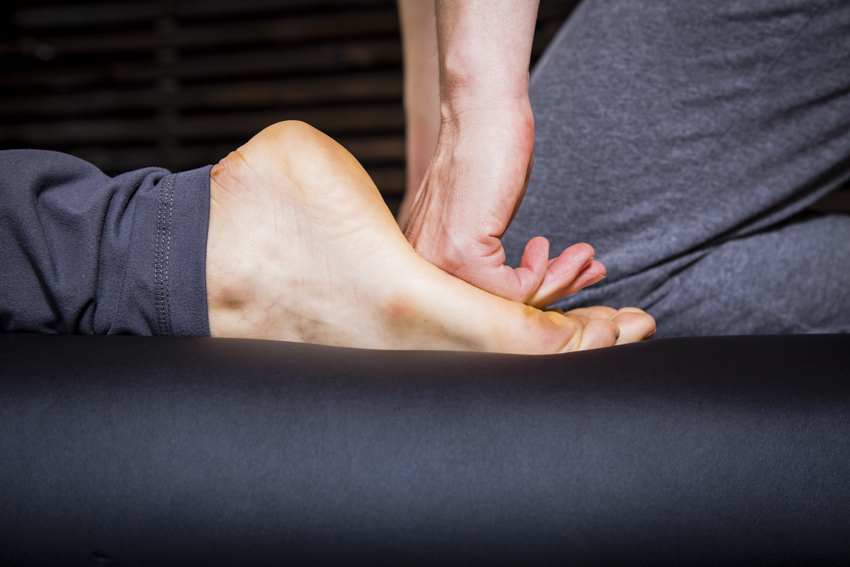
 Traditionally, Thai massage begins with the feet, which are full of reflexology points! Every other part of your body can be affected through the feet.

202A9065

You will feel a nice release and lengthening in your low back; acupressure points near the sacroiliac (SI) joint and along the spine relieve low back pain.

202A9123

 In this assisted posture, your shoulder is anchored to the mat for a deep twist, stimulating the organs in your abdomen and promoting healthy digestion.

202A9034

 Assisted cobra provides a lovely opening in the chest and shoulders; the pelvis is rooted into the mat with kneeling pressure to help protect the low back.

Lisa is hopeful that this will give you a better idea of what Thai massage is and what it would look and feel like. Sessions are typically 90 minutes, and over before you know it! Plus, you’ll get to rest in savasana for a few minutes before moving onto the rest of your day, so you’ll leave feeling relaxed and deeply nourished, much like you feel after taking a yoga class.

While laziness is usually frowned upon, in this case it is having people feeling better than ever. Who knew something so effortless could bring about so many benefits? What a relief!


For Instant Relief and Lasting Health Benefits, Start Going to Yoga

Instant gratification is attractive when it comes to fitness and weight loss. The diet and exercise fads that flaunt quick results are the most successful at grabbing the attention, and dollars, of millions of hopeful Americans.

While yoga does not top the list as a fast way to lose weight, it does drastically improve overall health and wellbeing, even after just one class. Many of yoga’s health benefits are felt instantly, and with little effort.

For those of you in need of some immediate benefits, read what you will feel the moment you start doing yoga.

Better Posture

A few minutes into yoga will have you standing up a little straighter. Yoga not only helps to decompress your spine and enhance your posture, it makes you feel taller, leaner, and stronger as a result of your improved posture.

Great Attitude

Taking those first deep breaths at the start of your practice refreshes your mind, clears your thoughts and sharpens your focus. A clearer mind means less stress, and a stress-free mind is a happy mind. You will be amazed at how big of an impact a little deep breathing can have on your attitude.

Less Pain

Sitting all day in the car or at a desk is hard on your body. Leading a sedentary lifestyle can be very agonizing to your hips, low back and neck. Light movement and stretching does wonders to relieve nagging, muscular discomfort. Remember, there is no need to touch your toes in yoga. A little goes a long way in saying goodbye to bodily aches and pains.

Lasting Results

Once you get into the habit of going to yoga on a regular basis, you will be inspired to keep going. When you start feeling these and other immediate benefits, it will be hard for you to miss yoga. The more you practice, the better you will feel, and the better you feel, the more yoga you will want to do. And, as we always say, when you do yoga, it doesn’t just help you; it helps those around you too.


Arm Balances Made Easy: Yes, You Can!

Sarah Thomson, Heart and Core Yoga teacher, explains how to ease into the following advanced yoga poses. Think you can’t do them? Well, think again! Learn how to successfully practice getting into crow pose, side crow, and handstand. Remember, a little goes a long way. Take it step by step, and soon you will be flying and floating in these fun yoga poses.

Sarah says:

Arm balances are some of the most exhilarating and exhausting asanas (yoga poses.)  They work the arms, strengthen the core, and require full focus and concentration.  They are also tons of fun!  However, arm balances can also be some of the most intimidating yoga poses.  It is not a lack of strength that prevents you from performing an arm balance, it’s the fear of falling flat on your face.  Some arm balances allow you to slowly ease your way into the pose, while others require full commitment and a leap of faith (as well as a leap of body!).  Using props is a great way to reduce some of the fear and intimidation surrounding arm balances.

Crow Pose

Crow is a great place to start when working arm balances.  There are lots of variations, and the best part is you are able to slowly make your way into the pose, backing off at any point if you get uncomfortable.  Placing a bolster or a folded blanket in front of your hands can assuage fears of face planting (and can prevent injury should a face plant actually happen!).  Starting with the feet on a block is one way to ease your way into the pose.  The extra lift you get from the block allows you to slowly shift your weight forward into the hands, and then gently pick up one foot at a time.

sarah1 sarah2

To Enter: Start in squat with both feet flat on the ground or on block.  Place both hands on the ground in front of you, and move knees to the back of the upper arms (even into the armpits if possible).  Move the weight of the body forward, look in front of you, make the feet feel light.  Pick up one foot, then the other, balancing on arms. Work towards straightening the arms.

Think About:  Pointing the feet and squeezing abs.  Make sure the gaze is out in front of your hands.

To Exit: Shift weight backwards and return feet to the floor.


Side Crow

Once you’ve mastered crow (or even if you haven’t, you never know what poses will work best for you!), it is time to try side crow.  Side crow can seem much more difficult than crow, but the arms are in almost the exact same position as regular crow; the main change is the twist in the abdomen.  Ideally the hips will be supported on the back of one arm while the knees float free. However, while you are still working on this pose, I suggest the “cheater” version, in which both the hips and the knees are supported by the backs of the arms.  As you become more comfortable with side crow you can work towards supporting the legs with only one arm.  You can use a block in side crow much like in crow, for extra lift under the feet.  A block can also be placed in front of the arms that will support the chest as you move into side crow.  Play around with the position of the block if you try this variation; you don’t want the block under your neck, but under the shoulder or chest.

sarah3


To Enter: Start in chair pose (utkatasana), bring hands to heart center and twist, catching left elbow on the side of the right knee to deepen the twist.  Place hands on the floor and enter the pose from here, or squat down all the way.  Bend elbows into chaturanga arms and keep the outside of the right leg stuck to the left elbow.  Lean forward, move weight into the hands and lift legs, keeping them together.

“Cheater” Version: Place right knee on left elbow and right hip on the right elbow to help get into the pose and get a feel for it.  The support of the hip on the right elbow helps you to balance the body.  Work towards supporting your legs only on the left elbow.

Variation: Start with feet on a block for more lift.  You can also use a block under your shoulder if you are afraid of falling on your face…

Think About: Lifting the feet, look ahead (not straight down.)

To Exit: Shift weight backwards, return feet to the Earth.


Handstand

Handstand is one of those poses that requires a leap of faith. To enter the fullest expression of the pose, you must kick both legs up high into the sky with no support!  The best prop you can use to help ease your way into handstand is the wall (or a tree!) Instead of doing handstand against the wall, and learning to kick slightly past vertical, I suggest practicing half handstand.  In half handstand, you are bent ninety degrees at the waist, the upper body is in handstand while the feet rest on the wall.  The legs should be parallel to the floor and the hips should stack directly over the shoulders and hands.  This is the best way to gain the muscle memory of handstand.  From here you can play around with lifting one leg to vertical, hold for five breaths, and then switch.  Eventually you will get comfortable enough being upside-down and try kicking up in the middle of the room!

sarah4


To Enter: Begin by sitting with your back against the wall and your legs stretched out in front of you.  Take note of where your feet are; you will want to place your hands in the same place as your feet so that when you are upside down your body makes a right angle.  Place your hands in the noted location and come into downward facing dog with your heels against the wall.  This down dog will likely be shorter (feet and hands closer together) than your usual down dog, that is ok.  Pick up your dominant leg and step it up towards the wall, placing the ball of the foot against the wall.  Kick your weight into this foot and step the other leg up to meet it.  You may have to readjust your foot placement; it can help to have a buddy nearby to tell you when your legs are parallel to the Earth.  It may feel a bit strange or intense; hold for as long as you feel comfortable.

Think About: Stretching from hands to the hips by keeping the spine long.  There is a tendancy to slightly arch the back, so engage the abs to keep the body hollow.  Keep pressure in all fingers and heel of hand and play around with shifting the weight to different parts of the hand.  When you start to do full handstand in the middle of the room, the hands play a huge part in keeping you balanced.  Look straight down with eyes (not whole head) or look directly behind you and try to keep the neck long and in a neutral position.

To Exit: Slowly step your feet back to the earth.  Drop the knees down to the mat and rest in child’s pose for a few breaths.

Sarah teaches Tuesday evenings from 7-8pm. 

Yoga 101: The Heart and Core of Popular Yoga Poses

September is a great time for everyone to get back to business. Whether you are returning to school, renewing your fitness resolutions, or incorporating a new and improved healthy diet into your lifestyle, the fall season is the perfect time to establish a new routine.

This special time of year is also perfect for new yoga students to embark on a journey into yoga, however, with the variety of yoga styles to choose from it can feel a little overwhelming to know which classes to take. It might be of comfort to learn that each class builds upon common and basic poses.

All of our classes at Heart and Core Yoga studio offer a crossover in the occurrence of these basic poses. Once you get familiar with them, you will have a strong foundation from which to build your practice. In addition, all yoga poses can be modified to suit the needs of the varying levels in yoga classes. While each pose may share the same components, no two yoga poses will look exactly alike. Every body is different, therefore each pose will also vary slightly.

The following is a list of five basic yoga poses you’ll likely come across in all classes, plus special tips on how to perform correctly, and how they benefit the mind and body.


Downward Dog

With both hands and feet on the mat, this pose affects all the muscles in the body. In our Vinyasa yoga classes, this pose is often revisited over and over again. It is also the most recognized pose, as well as the one people think of or call attention to when they speak about yoga.

page1_blog_entry263_3Downward-Facing-Dog

Tips: It is not a crime to have your heels lifted and knees bent in this pose. The importance is in keeping your hips high and your spine long, not curved.

Benefits: Lengthens and decompresses the spine, stretches the hamstrings, strengthens the arms, flushes the brain with oxygen, calms the mind.


Triangle

This is a great pose for all levels. Certain yoga styles offer variations of this pose, but it’s easily recognized, as the components are very similar.

page1_blog_entry263_1breast-yoga-4-triangleprop

Tips: Practice this pose as if your back is up against a wall. Keep your shoulders over your front leg. Resist tipping forward, instead turn your chest open toward the ceiling slightly.

Benefits: Slims the waist, strengthens the legs and core, aids in correcting postural imbalances.


Warrior I and II

Looking dynamic and powerful, it’s no wonder we see these poses in a lot of yoga ads or commercials. They exude self-assurance and poise. By practicing Warrior I or II, one feels like a warrior!

Warrior-22

Yoga_WarriorI_01_300x350(1) Yoga_WarriorII_02_300x350

Tips: Keep your front knee directly over your ankle. Maintain an upright position with both shoulders over your hips. Straighten and root down with your back leg firmly. Keep shoulders relaxed down and away from your ears.

Benefits: Strengthens the legs and hips, stretches the psoas muscles, instills a sense of confidence like a peaceful warrior.


Child’s Pose

This pose is often used as a reprieve from the challenging moments in yoga. It is recommended to visit this pose as often as needed when you need a little rest break.

tumblr_inline_mm3bvbDOOn1qz4rgp

childs-pose-edited

Tips: If you are unable to rest your forehead on the mat, rest it on your forearms, a yoga block or a folded blanket.

Benefits: Stretches the low back and hips, calms the nervous system, stimulates the kidneys and relaxes the spinal muscles.


Corpse Pose

Otherwise known as Savasana or final relaxation, this pose is the single most important one you will do in your yoga practice. It happens at the very end of class and is what makes your hard work worth it.

savasana

Tips: To fully experience this pose it is important to let go of all agenda and savor just “being” rather than “doing.” For some, this pose will be the most challenging to master. It requires a level of surrender that may seem counterintuitive in our busy world.

Benefits: Lowers blood pressure, relaxes heart rate, calms the mind and makes you fall in love with yoga.


These five poses lay the foundation for many yoga class routines. Variations will often include some twisting, extending or balancing in different ways, but by mastering the basics, the next steps will come naturally.


Telluride Yoga Festival Boasts an Unforgettable Experience July 10th-13th 2014

logo-1

Nestled in a stunning box canyon at nearly 9,000 feet above sea level, Telluride, Colorado boasts gorgeous mountain scenery, miles of all season exploration, fabulous shopping, and world-class cuisine. What was once a thriving, turn of the century mining town is now home to skiing enthusiasts, nature lovers, retired dignitaries and celebrities such as Tom Cruise, Oprah Winfrey and Jerry Seinfeld, just to name a few.

It is no wonder people from all backgrounds flock to Telluride. With a schedule full of informative, fun and educational festivals, from the world renowned Telluride Film Festival to the fungus fan’s Mushroom Festival, Telluride provides a take-your-breath-away backdrop that no other place can offer.

Imagine beginning your day with a cup of hot steaming coffee from one of the local meeting places in town. As residents and visitors gather to shoot the breeze over a chai mocha latte, you can almost hear the walls of Telluride’s historic old buildings whispering their own tales of life in the late 1800’s.

Next, step into the 21st century, and ride the gondola up to the town’s Mountain Village, where you may take a yoga class in the warm and inviting conference center, at the posh Peaks Resort and Spa, or perhaps outside on the green grass, under the clear blue sky.

3  5

After a blissful yoga class by one of the yoga festival’s talented list of presenters, visit one of the town’s many healthy restaurants. The Butcher and the Baker provides European style dining, while La Cocina de Luz brings the best flavor from south of the border, both offering local, homegrown, and organic cuisine.

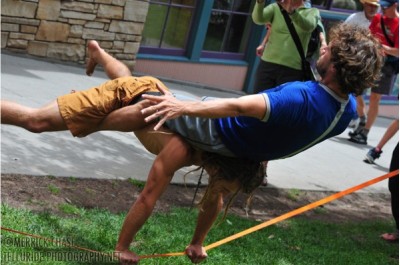
In between classes you may either join in on one of the free yoga sessions offered at local yoga studios such as the highly acclaimed Telluride Yoga Center, or watch an AcroYoga demonstration in a downtown park. Hula hoopers, slack liners and other amazing locals and visitors will be in full regalia, demonstrating their unique skills and talents, on and off of the yoga mat.

image_preview-1   telluride-yoga-festival1

The last yoga class of the day doesn’t mean the excitement is over. In fact, in Telluride, your evening is just about to get rolling. You may choose to have a reflective night and participate in some Kirtan chanting sessions, or visit one of the local clubs for some festive live music.

image_preview  DSC_6305-2-2-250x166

For more information visit www.tellurideyogafestival.com 

A Heartfelt Look into Yoga Therapy: Presented by AnneCorrine Berg Pattillo

By AnneCorrine

What is Yoga Therapy?

When we wake every day, we are new.  We have refreshed our cells and our mind has rested.  We have the same old aches and pains, but there is always something new too.  We have a chance to make a commitment to our own healing. This is not sexy or glamorous.  This could be PTSD, obesity, addiction, depression, unstable emotions, and chronic pain.  Let’s face it, life happens.

For me it’s been a journey that includes plantar fasciitis, tendonitis, bursitis, scoliosis, pregnancy and post-partum recovery.  That is on the outside.  On the inside there is the constant self-judgment, the habit of busy-ness, and a belief of never having enough.

I have managed to moderate my misaligned, pack rat, critical self.  I have been blessed with a confident and creative outward self.  But I need healing every day.  It feels good to heal.  Like a burden has been lifted.

ResizedImage_1398530707280

Yoga is the gift that keeps on giving.  It is wide in its application.  For example, there are poses (asanas) to limber up our hamstrings and help our back pain.  These are among the things we often consider “yoga”.  They are the countless poses that affect our physiology, and our other layers (koshas).  These layers penetrate to our deepest Self, our Heart, and to our biggest Self, our Soul.

Also, in Yoga Therapy, there are chants (mantras), that vibrate the stuck feelings and memories to the surface.  They may erupt into a stream of tears (a most high expression of spirit) or settle our scattered brains.

I “resonated” with asana and mantra, but there is so much more that Yoga Therapy can offer our sweet, suffering selves (breathing/pranayama, hand gestures/mudras, meditation/dhyana, and more).  Yoga philosophy is another tool for transformation and freedom.  All of Yoga eases the suffering of life:

Yoganganusthanat asuddhiksaye jnanadiptih avivekakhyateh = By dedicated practice of the various aspects of yoga, impurities are destroyed: the crown of wisdom radiates in glory.  Yoga can cure or lessen our physical, mental, moral, and spiritual sufferings” (B.K.S. Iyengar, Light on the Yoga Sutras of Patanjali, II.29).

It brings us from Suffering to Bliss. Ever tasted Bliss?  No? Try Yoga!  No kidding.  Bliss is not so far away.

Who can benefit from Yoga Therapy?

Do you have pain?  Trauma? Surgery recovery? Insomnia? Depression? Anger?  If you do, Yoga Therapy can help you.  I could go on.  But Yoga Therapy is for everyone.  Even if you feel perfectly healthy in your life, there is a constant sway or flux that we can navigate with simple tools from Yoga Therapy.  Anyone can make a small change to alter his or her physiology or outlook with Yoga Therapy.

Who is a Yoga Therapist?

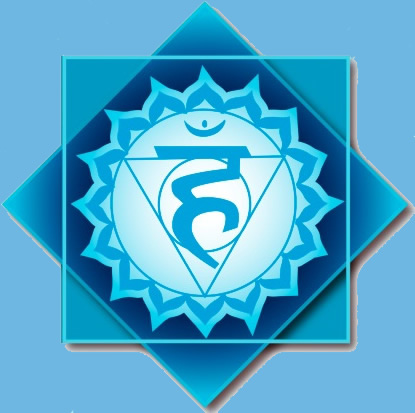
I found an application for my varied experience as a dancer, yogini, teacher, and friend.  Yoga Therapy fulfills it.  I connect to individual bodies and backgrounds and find a special package of tools for those individual needs.  One of my new favorite therapies is YantraYantras are geometric designs that indicate a certain Chakra (energy center or wheel), and stimulate the brain.  They are fun to draw for yourself, especially if you find pleasure in doodling!  And the process heals.

An example of application of a Yantra would be to create or find one to look at (like the one below) to cultivate more energy for a certain Chakra.  Like this blue petal lotus Yantra for the throat chakra, it is beneficial for sore throats and pursed lips.

Need to speak your mind?   Gaze at this Yantra.

789

Sound “Out there”?

It may be, but it works!  The proof has been coming out over the years, and Yoga Therapy is gaining momentum.

The International Association of Yoga Therapists is making headlines with the power of Yoga Therapy.  It is proving this power with published research and following it up with robust certification criteria.

There are currently over 125 Yoga Therapy schools around the world and more are being born.  Hundreds and hundreds of hours of study and practice are required for certification.  Many of these hours are dedicated to the outpouring of emotions that accompany the healing that we need.  There is no way out but to walk through the fire of your desire to make a change.

Interested?  Jump in!  Yoga Therapy teaches us that your beautiful soul is Divine and that you are suffering because you have forgotten that you are Divine, a real Child of God.

So, Downward Facing Dog Pose cures my chronic Plantar Fasciitis, and Restorative Yoga cures my stress, but what can cure my judgment?

“My beloved child, break your heart no longer.  Each time you judge yourself, you break your own heart.” (Swami Kripalvanandji).  Yoga Therapy teaches us that We Are Love.  Bit-by-bit, Yoga and its many therapies make this more familiar.  It shows us that Bliss is ours to know and to have.

Each day is a new one.  We can choose to make a small move for our own well-being.  It does not have to be complex, like the many facets of the Jewell that is Yoga.  Open your heart to what Yoga can offer you.  You are the Gift to the world.  Let your Light shine.

IMG_5825

I look forward to seeing you through a healing and enlightening journey in my Restorative Yoga Therapy classes Wednesdays from 6:30-7:45pm.